
Rebar

Deformed Rebar Price
| Rebar Size | Standard | Weight | Delivery Location | Price (Toman) | Order |
|---|---|---|---|---|---|
| 12 | A3 | 10.5 | Call | Submit Order | |
| 14 | A3 | 14.5 | Call | Submit Order | |
| 16 | A3 | 18.5 | Call | Submit Order | |
| 18 | A3 | 24 | Call | Submit Order | |
| 20 | A3 | 29.5 | Call | Submit Order | |
| 22 | A3 | 35.5 | Call | Submit Order | |
| 25 | A3 | 46 | Call | Submit Order | |
| 28 | A3 | 58 | Call | Submit Order | |
| 32 | A3 | 75 | Call | Submit Order |
Quick Links
What Is Rebar?
Straight-length deformed rebar is a widely used steel section in construction and infrastructure, playing an essential role in reinforced concrete. Standard surface ribs provide strong bonding with concrete and prevent reinforcement from slipping. This improves structural resistance to tensile, compressive, bending, and seismic forces and increases safety under various loads. Deformed rebar is therefore a primary material in residential, commercial, and industrial buildings, bridges, tunnels, dams, and other infrastructure projects.
Straight-length deformed rebar is produced in grades A2, A3, and A4 and diameters from 8 to 40 mm . Each grade differs in mechanical properties, rib pattern, and strength and is selected according to project requirements. A2 is commonly used for stirrups and bending because of its ductility, while higher-strength A3 and A4 serve as primary reinforcement in columns, beams, foundations, concrete slabs, shear walls, and heavy structures.
Raw material quality, manufacturing processes, precise dimensional control, chemical analysis, mechanical properties, and compliance with national and international standards determine the quality and durability of Straight-length deformed rebar . Standard weight, uniform ribs, yield strength, tensile strength, and manufacturing accuracy are important selection criteria. Standard-compliant rebar improves structural safety and reduces long-term maintenance costs.
Iran Steel Hub sources Straight-length deformed rebar from reputable domestic and international manufacturers, providing current prices, expert advice, technical specifications, and direct purchasing. For quality rebar, competitive pricing, authenticity assurance, and prompt delivery throughout Iran, our specialists can recommend and supply products suited to your project.
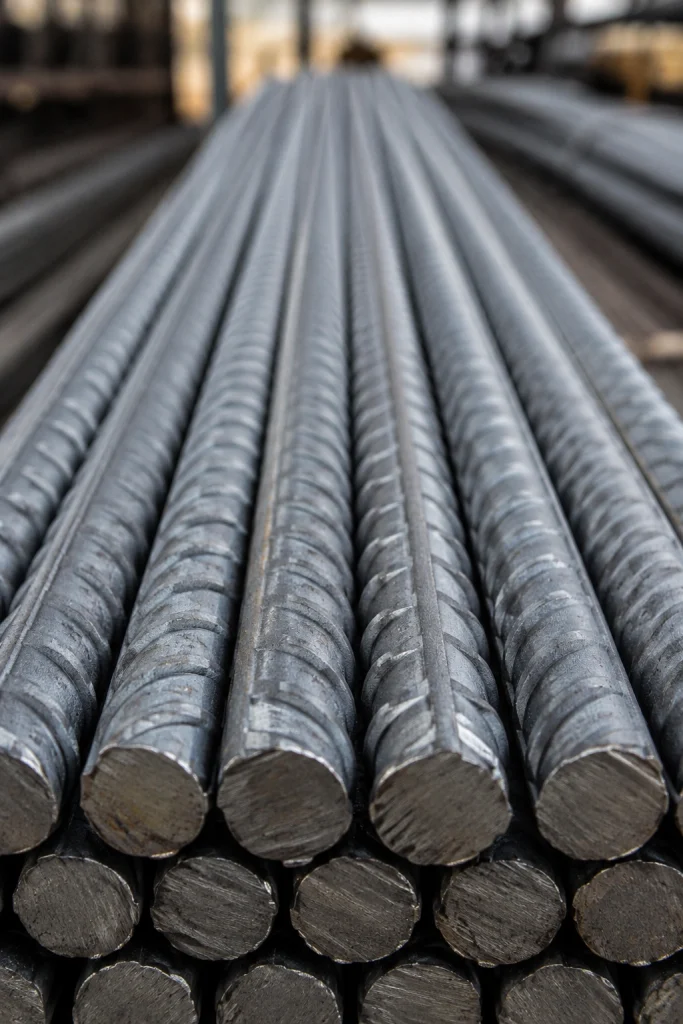
Straight-Length Deformed Rebar Manufacturing Process
Rebar Manufacturing Process directly affects product quality, strength, and durability. Rebar must meet recognized standards to provide the required resistance to tensile and compressive loads. Most steelworks use hot rolling, combining quality with production efficiency.
In the first stage of the Rebar Manufacturing Process, standard-sized steel billets enter reheating furnaces at approximately 1,100 to 1,250 degrees Celsius. They then pass through rolling stands, progressively reducing their cross-section to the required diameter.
The forming stage creates standard surface ribs to improve bonding with concrete. Rib patterns and product specifications follow production standards and grades such as A2, A3, and A4.
After rolling, controlled cooling develops suitable mechanical properties, increases strength, and reduces internal stresses. The product is then cut into standard lengths, bundled, and prepared for quality control testing.
At the end of the Rebar Manufacturing Process, tests verify dimensions, weight, chemical composition, tensile and yield strength, elongation, and rib quality against national and international standards. Modern equipment, quality materials, and careful process control produce durable rebar with dependable performance and increased safety in construction and industrial projects.
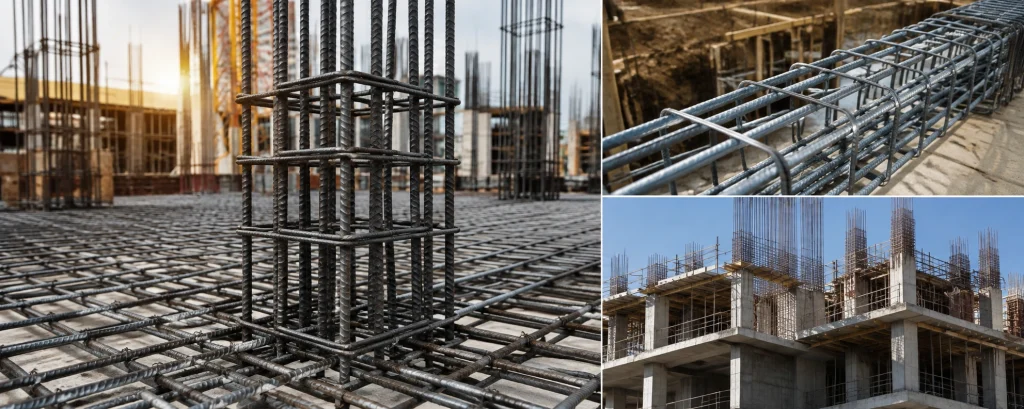
Straight-Length Deformed Rebar Features and Applications
Straight-length deformed rebar is used in construction and infrastructure, where its standard surface ribs provide a strong bond with concrete. This helps distribute tensile and compressive forces and improves resistance to heavy loads, earthquakes, and other stresses. Deformed rebar is therefore a primary material in reinforced concrete structures.
Important straight-length deformed rebar features include high tensile strength, resistance to deformation, strong concrete bonding, long service life, and suitability for various climates. A2, A3, and A4 grades have different mechanical properties and rib patterns. Diameters from 8 to 40 mm serve construction, industrial, and infrastructure requirements.
Straight-length deformed rebar applications include foundations, columns, beams, concrete slabs, shear walls, bridges, tunnels, dams, industrial structures, towers, and major infrastructure. It increases tensile resistance, helps prevent concrete cracking, and improves structural safety and durability.
For optimum performance, select Straight-length deformed rebar according to national and international standards, the appropriate grade and diameter, and project specifications. Standard-compliant rebar with verified analysis improves construction quality and reduces lifetime maintenance costs. Reputable suppliers and a technical review before ordering support successful projects.
A2 Rebar
A2 Rebar offers suitable strength and greater ductility than some other grades, making it useful in many construction projects. Its spiral ribs and compliance with national and international standards combine strength and formability for bending, stirrups, and concrete structural components.
Important properties of A2 Rebar include a yield strength of approximately 340 MPa, a tensile strength of approximately 500 MPa , and suitable ductility. These properties provide load resistance while allowing bending without cracking or failure. A2 is therefore commonly used where stirrups and bending are required.
A2 rebar applications include stirrups, beams, columns, foundations, concrete walls, and residential, commercial, and industrial structures. Welding is generally discouraged unless the relevant technical procedures and standards are followed.
When purchasing A2 Rebar , check diameter, standard weight, rib quality, chemical analysis, mechanical properties, and manufacturer. Standard-compliant rebar with a quality certificate improves safety, reinforced concrete performance, and building service life.
Iran Steel Hub offers A2 Rebar in various sizes with current prices, specifications, and expert advice for reliable direct purchasing for construction and infrastructure projects.
A3 Rebar
A3 Rebar is widely used in construction because its mechanical strength reinforces concrete structures. It has chevron ribs and is manufactured to national and international standards. With higher tensile and yield strength than A2, A3 is commonly used as primary reinforcement in load-bearing members.
Important properties of A3 Rebar include a yield strength of approximately 400 MPa and a tensile strength of approximately 600 MPa . It resists tensile and compressive forces and bonds strongly with concrete through its standard ribs. A3 is less ductile than A2 and is unsuitable for severe or repeated bending; bending must follow technical requirements.
A3 rebar applications include foundations, columns, beams, slabs, shear walls, bridges, tunnels, dams, towers, and industrial and infrastructure projects. As primary reinforcement in many reinforced concrete structures, it increases resistance to applied loads and earthquake forces.
When purchasing A3 Rebar , check size, standard weight, ribs, chemical analysis, mechanical properties, manufacturing standard, and producer. Standard-compliant rebar with quality certification improves safety, reduces maintenance costs, and extends service life.
Iran Steel Hub offers A3 Rebar in various sizes with current prices, technical specifications, and specialist advice for dependable direct purchasing for construction, industrial, and infrastructure projects.
A4 Rebar
A4 Rebar serves heavy structures, major infrastructure projects, and buildings with demanding specifications. Modern manufacturing and national and international standards provide high strength, allowing steel consumption to be reduced in some projects. Its composite ribs create strong concrete bonding, improving structural strength and safety.
Important properties of A4 Rebar include a yield strength of approximately 500 MPa and a tensile strength of approximately 650 MPa . It performs well under tensile, compressive, and dynamic loads and suits structures requiring high resistance to earthquakes and heavy loads. Its greater hardness requires bending and welding to follow technical procedures and engineering standards.
A4 rebar applications include high-rise towers, bridges, tunnels, dams, power stations, industrial structures, infrastructure, and heavy foundations. Alongside increased load capacity, this grade can reduce the quantity of reinforcement and optimize overall project weight.
When purchasing A4 Rebar , carefully check size, standard weight, rib quality, mechanical properties, chemical analysis, manufacturing standards, and producer. Certified, standard-compliant rebar supports long-term safety, durability, and performance.
Iran Steel Hub sources A4 Rebar from reputable producers, with current prices, full technical specifications, and specialist advice for reliable direct purchasing for construction, industrial, and infrastructure projects.
Why Buy From Us?
Choosing a reliable, professional supplier is vital to construction, infrastructure, and industrial projects. Iran Steel Hub combines experience, expertise, and an extensive supply network to make purchasing straightforward and dependable. From your initial inquiry, our sales specialists help you select products suited to your project and obtain a pro forma invoice promptly.
Transparent pricing and current steel product quotations are key advantages of Iran Steel Hub. Customers can purchase with up-to-date market information and choose cash or credit settlement. Flexible payment methods support cash flow management and simplify sourcing.
Rigorous quality control is another key strength of Iran Steel Hub. Our specialists inspect and evaluate goods before dispatch to verify their technical specifications, quality, and compliance with customer requirements, helping buyers receive their products with confidence.
Organized transport and prompt loading enable Iran Steel Hub to dispatch orders throughout Iran. Coordinated loading and delivery reduce waiting times and help projects progress faster. Professional service, continued support, reputable sourcing, and customer satisfaction make us a reliable choice for steel products.
More Services
Insurance
Lorem ipsum dolor sit amet, consectetur adipiscing elit. Ut elit tellus, luctus nec.
Taxes
Lorem ipsum dolor sit amet, consectetur adipiscing elit. Ut elit tellus, luctus nec.
Efficency
Lorem ipsum dolor sit amet, consectetur adipiscing elit. Ut elit tellus, luctus nec.
Estate Planning
Lorem ipsum dolor sit amet, consectetur adipiscing elit. Ut elit tellus, luctus nec.
Strategy
Lorem ipsum dolor sit amet, consectetur adipiscing elit. Ut elit tellus, luctus nec.
Communication
Lorem ipsum dolor sit amet, consectetur adipiscing elit. Ut elit tellus, luctus nec.
Evaluation
Lorem ipsum dolor sit amet, consectetur adipiscing elit. Ut elit tellus, luctus nec.
Restructuring
Lorem ipsum dolor sit amet, consectetur adipiscing elit. Ut elit tellus, luctus nec.
Let the Numbers Speak
Happy Clients
Successful Projects
Experts & Advisors
Straight-Length Deformed Rebar Price
An important factor in estimating construction, infrastructure, and industrial project costs is Straight-Length Deformed Rebar Price . As the primary steel section reinforcing concrete, deformed rebar directly affects total construction costs. Contractors, developers, and steel buyers therefore review current straight-length deformed rebar prices before purchasing.
Several factors influence Straight-Length Deformed Rebar Price , including diameter, grade (A2, A3, A4), standard weight, producer, raw material quality, freight, exchange rates, billet prices, and supply and demand. Steel market fluctuations and domestic and international economic conditions can also change prices daily.
Current Straight-Length Deformed Rebar Price is generally quoted by weight (kilogram or ton), size, and producer, with potentially significant differences between brands. Compare specifications, production standards, actual weight, and quality alongside price for economical, reliable purchasing.
Iran Steel Hub provides Straight-Length Deformed Rebar Price updates and quotations for deformed rebar in various sizes and grades. Expert guidance, reputable sourcing, quality assurance, and prompt delivery throughout Iran help customers obtain the products they need at competitive prices and terms.
Current Straight-Length Deformed Rebar Price
Deformed rebar is the main steel section in reinforced concrete, so price fluctuations directly affect construction and infrastructure costs. Checking current prices before ordering supports cost management and purchasing plans.
Several factors influence Current Straight-Length Deformed Rebar Price , including grade (A2, A3, A4), size, weight, producer, raw material quality, billet prices, exchange rates, freight, and supply and demand. Global steel prices and domestic economic conditions can also cause daily fluctuations. Recent reports also indicate limited fluctuations and declines in some brands.
Current Straight-Length Deformed Rebar Price is generally quoted per kilogram, while total order cost depends on bar weight, quantity, loading location, and freight. Compare standard weight, rib quality, specifications, and production standards as well as price.
Iran Steel Hub provides Current Straight-Length Deformed Rebar Price updates and quotations for rebar in various sizes and grades. Alongside current pricing, our specialists help you select products suited to your project’s requirements, budget, and site conditions.
Buy Rebar
An important step in sourcing construction, infrastructure, and industrial materials is purchasing rebar . As the primary concrete reinforcement, rebar improves tensile resistance, strength, and structural safety. The right selection supports construction quality and can substantially reduce building and maintenance costs. Review specifications carefully before purchasing.
When purchasing rebar , choose the grade (A1, A2, A3, or A4), size, standard weight, rib pattern, manufacturing standard, and producer according to project needs. Review chemical analysis, mechanical properties, quality certificates, and compliance with national and international standards before ordering.
Rebar prices also depend on billet prices, exchange rates, freight, supply and demand, and manufacturer. Alongside checking current rebar prices, review product quality and supplier reputation to ensure economical purchasing of standard-compliant products.
Iran Steel Hub sources plain and deformed rebar in various grades and sizes from reputable domestic and international manufacturers. Current prices, specialist advice, authenticity assurance, analysis certificates, and prompt delivery throughout Iran support reliable direct purchasing at competitive prices.
Request a Consultation
Your first step toward smarter steel trading starts here.
Consult our specialists for informed purchasing and sourcing decisions. Complete the form so we can guide you.